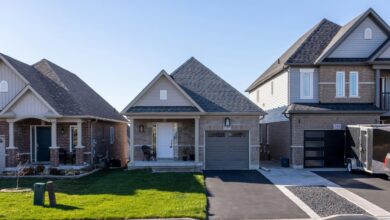
The inherent concept of private property ownership—the fundamental right to acquire, use, and dispose of one’s land—is an indispensable pillar of a free-market society. However, this profound individual freedom cannot exist in a vacuum; it must be balanced meticulously against the collective necessity for public order, safety, and the planned, orderly development of communities.
Without clear rules governing how land is used, a vibrant residential neighborhood could instantly be jeopardized by the arbitrary construction of a noxious industrial factory or a high-traffic commercial enterprise. This inevitable tension between individual property rights and the common good is managed entirely by Zoning and Land Use Law.
This complex, specialized body of administrative and constitutional law establishes the strict rules and regulations that dictate precisely what can be built where and how that property can be utilized. This crucial discipline provides the essential, systematic framework for managing urban growth. It minimizes conflicts between competing land uses, preserves property values, and shapes the physical, social, and economic trajectory of every municipality.
Understanding the intricate mechanics of zoning, the necessary regulatory oversight, and the legal limits on governmental power is absolutely non-negotiable. This knowledge is paramount for every homeowner, developer, and entrepreneur seeking to maximize property value and secure long-term investment viability.
The Foundational Power of Zoning Authority
Zoning is the core mechanism used by local governmental bodies—typically cities, towns, and counties—to implement their comprehensive planning goals. This power is legally derived from the state’s inherent constitutional “police power.”Police power is the broad authority of the government to enact and enforce laws to promote the general public health, safety, morals, and general welfare. Zoning is the direct exercise of this fundamental state power at the local level.
Zoning works by dividing the entire geographic area of the municipality into separate, distinct districts or zones. Each zone is then assigned specific, detailed rules regarding the permitted uses and the physical dimensions of development. These rules create clear, predictable expectations for landowners and developers. This structure is essential for maintaining community character.
The overarching objective is not to prohibit development entirely but to ensure the compatible coexistence of different land uses. Zoning separates residential areas from heavy industrial activities. It also regulates commercial density. This planned separation prevents negative externalities, such as excessive noise, pollution, or traffic, from encroaching on residential quality of life.
Zoning provides the necessary stability for property values. It guarantees to property owners that the character of their immediate neighborhood will not be arbitrarily undermined by adverse uses. This predictability and stability are crucial for sustaining long-term real estate investment.
Classifying the Primary Zoning Districts
Municipalities categorize land into several fundamental zoning districts. Each district category is defined by the type of activity that is legally permitted within its boundaries. These classifications provide the essential structure for urban planning and growth.
A. Residential Zoning
Residential Zoning reserves land strictly for housing and related supportive community services, such as schools and parks. This is the most common and extensive type of zoning in any municipality. Residential zones are further subdivided based on density. Subdivisions include single-family detached homes, low-density multi-family housing, and high-density apartment complexes. The rules often impose strict limits on building height and setback lines.
B. Commercial Zoning
Commercial Zoning reserves land primarily for businesses that involve trade, office work, retail sales, and personal services. This can include everything from small neighborhood convenience stores to massive regional shopping centers. Commercial zones are strategically located for easy public access and efficient transaction flow. Regulations often govern sign size, parking capacity, and lighting standards.
C. Industrial Zoning
Industrial Zoning designates areas specifically for manufacturing, processing, storage, and distribution activities. This zoning is essential for economic development. It is often strictly segregated from residential zones due to the potential for excessive noise, heavy truck traffic, or the production of air and water pollutants. Industrial zones are further classified into light (e.g., assembly) and heavy (e.g., chemical processing) categories.
D. Agricultural Zoning
Agricultural Zoning protects large tracts of land for farming, ranching, and other primary production activities. The goal of this zoning is to preserve the land’s productive capacity. It actively limits urban sprawl and dense residential development in rural areas. Regulations often impose massive minimum lot sizes to ensure the land remains viable for large-scale agriculture.
E. Mixed-Use Zoning
Mixed-Use Zoning is a modern planning trend that actively encourages the blending of compatible uses within the same building or district. This typically involves combining residential units with ground-floor commercial or retail spaces. Mixed-use promotes walkability, reduces reliance on personal vehicles, and fosters vibrant, active public spaces. This planning is central to new urban development models.
Height, Bulk, and Dimensional Controls

Zoning regulations do far more than simply separate land uses. They also impose strict dimensional controls that govern the physical characteristics of any structure built within a specific zone. These rules control the density, appearance, and physical relationship between buildings. They are critical for managing light, air, and public access.
F. Height Restrictions
Height Restrictions dictate the absolute maximum number of stories or the total vertical limit for any structure built in a zone. This is crucial for preserving sunlight access in low-density neighborhoods. It also prevents the dominance of overly large structures in historic or sensitive areas. Height control manages the visual impact of development.
G. Setbacks
Setbacks are mandatory minimum distances that any building must be placed back from the property lines, such as the front, rear, and side boundaries. Setback rules ensure adequate space between buildings. They provide light and air circulation. They are also necessary to maintain space for utilities and emergency vehicle access.
H. Floor Area Ratio (FAR)
The Floor Area Ratio (FAR) is a critical metric used to control density in commercial and high-density residential zones. FAR is the ratio of the total floor area of all stories of a building to the size of the land parcel. A higher FAR permits a larger structure on a smaller lot. FAR is a sophisticated tool for managing the bulk and intensity of development.
I. Lot Coverage and Density
Lot coverage limits the percentage of the total lot area that can be physically covered by buildings and impermeable surfaces. Density controls limit the number of dwelling units that can be built per acre of land. These rules are essential for managing traffic, utility loads, and overall neighborhood intensity. Density management preserves the quality of life.
Tools for Flexibility and Relief
The strict, systematic nature of Zoning Law is necessary for order. However, it can sometimes produce inflexible, inappropriate, or unduly harsh results in unique circumstances. The law provides specific tools that allow for flexibility and relief from the strict letter of the ordinance. These tools prevent the law from being too rigid.
J. Variances
A Variance is a mechanism that grants relief from a specific dimensional or bulk standard of the zoning ordinance (e.g., a slight reduction in a mandatory setback distance). The applicant must prove that adhering to the rule would create an undue hardship due to the property’s unique physical characteristics. Variances do not change the allowed use of the land.
K. Conditional Use Permits (CUP)
A Conditional Use Permit (CUP) allows a specific use that is generally appropriate for a zone but requires individualized review and specific conditions to ensure compatibility. Examples include allowing a small church or a childcare facility in a large residential area. The permit imposes conditions (e.g., parking requirements, operational hours) to mitigate potential adverse impacts on the neighborhood.
L. Zoning Amendments and Rezonings
A Zoning Amendment (or rezoning) is a request to change the zoning classification of a specific parcel of land. This is a legislative process that requires approval from the local governing council. Amendments are usually granted only if the change aligns with the community’s overall comprehensive plan. These changes are often controversial and highly political.
M. Nonconforming Uses
A Nonconforming Use is a land use that was legal when it was established but has since been rendered illegal by a newly enacted zoning ordinance. The law generally allows these existing uses to continue. However, the law often prohibits their expansion or rebuilding if destroyed, aiming for their eventual elimination. This gradually brings the entire area into compliance.
Legal and Constitutional Constraints
The power of the government to implement Zoning Law is immensely powerful, but it is not absolute. This power is constrained by fundamental principles of Constitutional Law that protect private property rights from excessive governmental reach. Judicial review is the ultimate check on this power.
The primary constitutional constraint is the prohibition against uncompensated takings of private property. If a zoning regulation is so restrictive that it completely deprives the landowner of all economically viable use of their land, the law considers it a “regulatory taking.” The government must then compensate the owner for the loss of value.
Furthermore, zoning regulations must serve a legitimate public purpose. They cannot be used arbitrarily to promote private interests or enforce social exclusion. The legal test requires that the regulation be rationally related to a valid goal, such as public health or safety. Zoning laws that are vague or overly restrictive are often overturned by the courts.
Procedural due process requires that local government decisions regarding zoning—especially rezonings and variances—be made through a transparent, fair process. Affected landowners must receive adequate notice of all proposed changes. They must be given a meaningful opportunity to be heard at public hearings before a decision is finalized.
Conclusion

Zoning Law is the essential administrative tool for balancing private property rights against the necessity of public welfare.
The system functions by dividing municipalities into specific districts, dictating permissible land uses and development intensity.
Dimensional controls, including mandatory setbacks and strict height restrictions, govern the physical relationship between structures.
Tools like variances and conditional use permits provide necessary, case-by-case flexibility to avoid overly harsh or inappropriate application of the rules.
The power of zoning is strictly constrained by the constitutional prohibition against uncompensated regulatory takings of all economically viable land use.
Effective zoning promotes compatible coexistence between different uses, preventing the encroachment of adverse activities like heavy industry on residential life.
The most powerful tool for ensuring adherence is the public nature of the process, demanding transparency and adherence to formal procedural due process.
Zoning regulates density through metrics like Floor Area Ratio (FAR) and limits on the number of units per acre of land.
Understanding local zoning ordinances is the non-negotiable first step for every developer and homeowner to secure the legality of their planned use.
This intricate legal framework guarantees predictability, which is absolutely vital for sustaining and maximizing long-term real estate investment value.
Zoning acts as the primary architectural system that structures the physical environment and the economic viability of the entire community.
This discipline is the authoritative guardian of planned urban growth, public health, safety, and the preservation of neighborhood character.